Behind the Scenes of The Trial and The Booksellers

Working on a theatre production means juggling many creative and technical roles to bring a story to life. Recently, I had the opportunity to contribute to two very different shows: The Trial and The Booksellers. Both projects involved hands-on work with set design, costume, and sound, but each presented unique challenges and learning experiences. This post shares insights into my contributions, focusing on how I built and managed sound cues using QLab, collaborated on set and costume design, and helped train someone new to run the QLab during performances.


Building the QLab for The Trial
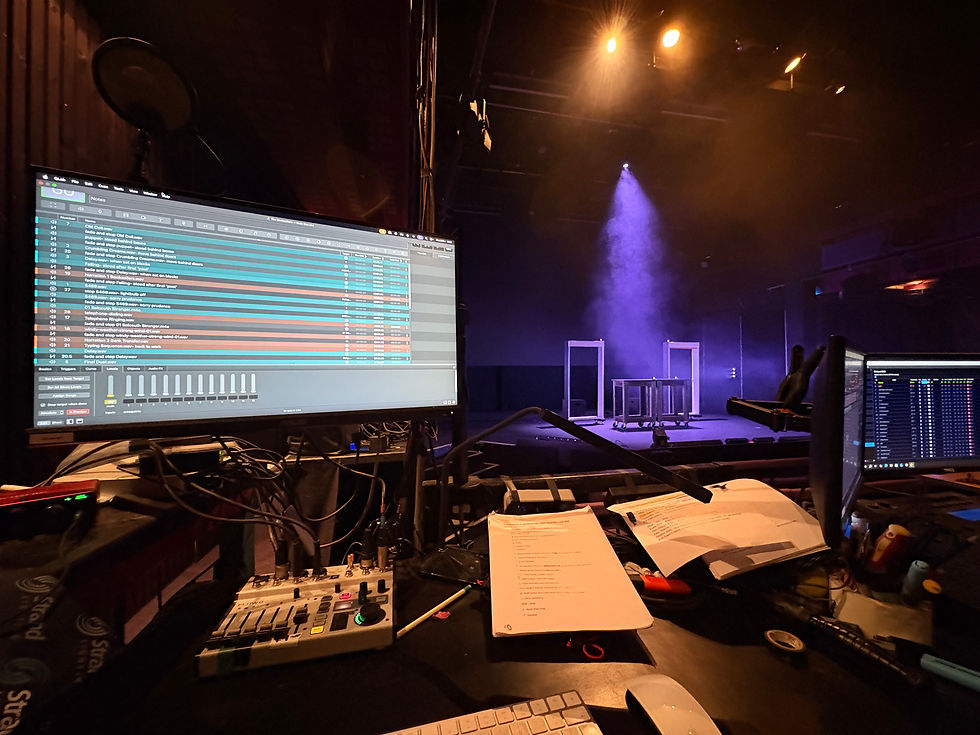
The Trial is a complex production that relies heavily on atmosphere to convey its mood. The director had sourced most of the sounds herself and had a clear vision of what she wanted. Therefore, my role included assembling the QLab with the sounds and all other cues, which are essential for controlling audio-visual effects and music during the show. QLab is a powerful tool that allows precise timing and layering of sounds/cues, which is crucial for a play with shifting tones and intense scenes.
Setting up the QLab involved:
Programming cues to trigger automatically or manually, depending on the scene’s needs.
Testing the timing repeatedly to ensure smooth transitions without distracting delays.
Once the system was ready, I spent time teaching a new operator how to run QLab during the live performances. This training covered:
Navigating the QLab interface efficiently.
Understanding cue sequences and how to adjust volume or timing on the fly.
Troubleshooting common issues like audio dropouts or cue misfires.
This hands-on training was vital to ensure the show’s sound ran seamlessly, allowing the operator to feel confident and responsive during each performance.
Collaborating on Set and Costume Design for The Trial
Beyond sound, I contributed to the set and costume design. The set needed to reflect the play’s surreal and oppressive atmosphere, so we focused on keeping it minimalistic but impactful. This consisted of:
Large, red, oak chairs all with striking woodwork and leading lines
A projection screen upstage
Everything plain black (floor and flats)
When designing the costumes we aimed to stay consistent with the red and black colour palette and keep the costumes simple and uniform with each other as the actors were all multi-roling. The final costumes included:
Black shirts with red ties
Black trousers
Red converse
Black waistcoats
One red hat shared between the cast to represent which actor was playing Josef K at each moment since multiple members of the cast played him at different points.


Creating and Running the QLab for The Booksellers
Alongside working on The Trial, I worked The Booksellers, a production inspired by a Roald Dahl novel. This show had a similar style, with its minimalistic set design and highly technical movements and overall nature of the acting.
For The Booksellers, I gathered/created sound effects as well as sourcing various tracks the the director wanted to use so that I could create the QLab. This involved:
Recording voiceovers and layering them over music
Setting volume levels and durations
Programming these sounds into QLab for easy playback during the show.
I also helped with the set design, focusing on minimalism, whilst also allowing for clever interaction with the set items as there were only two actors in the piece. This consisted of:
Two human-sized frames on wheels with retractable blinds so that the actors could hide behind them as well as step through them and moved them around to create interesting sequences.
Two small desks on wheels which they used in a number of different ways along with the frames.
Both the frames and the desks had little bells attatched to them which the actors used at various points in the play.
Two plain black wooden blocks to interact with and sit/stand on


Teaching and Teamwork in Theatre Production
One of the most rewarding parts of these projects was sharing knowledge and supporting the team. Teaching someone new to QLab required patience and clear explanations. I found it helpful to:
Break down complex tasks into simple steps.
Use real show cues as examples.
Encourage hands-on practice with immediate feedback.
This approach helped the new operator gain confidence quickly, which is essential in a live theatre environment where mistakes can be costly.
Working across sound, set, and costume also meant balancing different creative inputs and technical demands. Communication was key to making sure all elements worked together smoothly and that both directors were happy and that their visions had been realised. Regular meetings and rehearsals allowed us to adjust designs and sound cues based on what worked best in practice.
Final Thoughts and experience working a double-header
Working on and contributing to both The Trial and The Booksellers showed me how interconnected the elements of theatre production are. Both shows ran straight into each other and so timing and communication was crucial.
Sound design is not just about effects or music; it supports the story and mood. Set and costume design create the world the actors inhabit, influencing how the audience experiences the play.
Overall it has been a great experience and both pieces were exceptional and so complex yet so beautifully portrayed. I feel lucky to have been able to work on them!

Comments